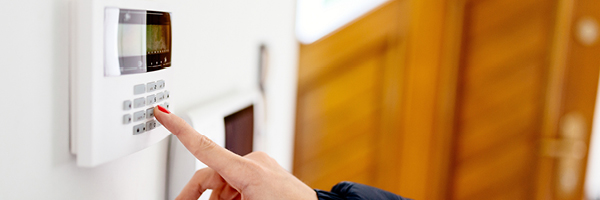
Picture this, you are out of town for the weekend and your phone alerts you that motion has been detected at your front door. You open your home security mobile app to see that the would-be intruder is the person you hired to look after your pet while you are away. You can breathe a sigh of relief that your home and belongings are safe.
Advanced security features and home monitoring devices can deter theft and break-ins. According to a study conducted by the University of North Carolina, 60% of burglars avoid homes that have a smart home security system installed. Smart home technology continues to evolve and grow in popularity. According to Statista, more than 93 million active households will be using smart home technology by 2027.
Smart home security systems are becoming more advanced, allowing for greater control and more security features than ever. Staying connected with what matters most to you has never been easier. Below we share information about available smart home technology, how it can enhance home security and how it can protect your home from accidents such as water leaks or home fires.
Outdoor home security devices
-
Security cameras
Cameras allow you to connect via Wi-Fi to your smart device and monitor activity outside the home. You can choose to receive notifications via your smart device or email when motion is detected, and many cameras will automatically begin recording so you can have a record of events after they occur. The cameras are designed to withstand weather exposure such as rain, snow, and extreme temperatures.
-
Smart doorbell
Like outdoor security cameras, video doorbells allow you to monitor activity outside the home. Many models alert you via smart device when someone presses the doorbell button, and some have built-in motion sensors.
-
Automatic garage door open/close monitoring
Chances are you have second guessed whether you closed the garage door before leaving home. Smart garage door openers allow you to monitor if your garage door is open or not. Most models can attach to your existing garage door opener and connect to your smart phone. They also support multiple users.
Inside home security systems
-
Smart home system
Smart home systems, or smart home hubs, allow convenient control of all your smart home devices on one platform. These are often touch displays throughout the home—allowing convenient control and monitoring.
-
Smart thermostat
Smart thermostats allow you to monitor and adjust the temperature of your home from your smart device. This can help keep your home temp at a neutral and safe level. Some devices even learn your heating and cooling schedule from day to day and make recommendations to save money on electricity.
-
Smart security system for doors and windows
Smart security systems can be installed in doors and windows to detect motion. Like other smart home devices, you can monitor your home from your smart device and get alerts if there is concern of intruders.
-
Smart door locks
Smart door locks are a great addition to your smart home technology system. They allow for more control than a standard deadbolt—you can unlock or lock your door from anywhere and give digital control to friends or family. No more hiding a key under the door mat and risk it being found by the wrong person.
-
Water leak detector
Water damage to your home can be extremely costly. While many smart home features offer advanced home security, water leak detectors can save you a lot of money by alerting you to a water leak before extensive damage is done to your home. Sensors are placed throughout the home and set off an alert to your phone when a leak is detected. Some systems are even equipped with an automatic shut off system.
-
Air quality monitors
Indoor air quality monitors detect, monitor and analyze pollutants found inside your home. When pollutants are detected, they can provide instant alerts, and some can even trigger an automation to activate air purifiers or adjust HVAC systems when pollutant levels exceed thresholds.
-
Smart fire and carbon monoxide alarms
Replacing your smoke and carbon monoxide (CO) alarms with a smart counterpart is a no-brainer when it comes to protecting your home from accidents. Some models are equipped with voice alerts that inform you the type and location of the danger, and what you should do in response to the emergency. Some models will send a link to your smart phone, asking if you’d like to dial 911. These features allow you to respond quickly should an emergency occur.

Learn about our
Home Insurance
How to prevent smart home hacking
As is the case for most technology, smart home devices come with potential security and privacy risks—but there are steps you can take to minimize risk and protect your home.
According to the National Institute of Standards and Technology (NIST), here are some ways to secure your devices:
-
Enable authentication
This is an extra step you can add when signing into a device or account and usually includes using a PIN, multi-factor authentication or verifying identity using biometric methods like facial recognition or your fingerprint.
-
Don’t reuse passwords
Using the same password in multiple places creates more vulnerability.
-
Disable unused features
Sometimes you can turn off features on your device you’d prefer not to use. It’s worth checking to see if you can disable them.
-
Monitor privacy settings
Familiarize yourself with the privacy settings on your device and adjust them to your comfort level.
-
Update devices automatically
Check to make sure your smart devices are set up to update automatically. Tech companies update devices often, and those can include fixes to security issues.
-
Segment your network
The NIST suggests setting up a separate network for your smart home devices. This helps create a barrier between your personal devices—loaded with sensitive information—and smart devices that might be more easily compromised.
Real-world impact
Smart home devices don’t just make life more convenient; they can help protect lives and prevent bad situations from getting worse.
“Water sensors alert homeowners to a leak before structural damage or mold creates unsafe living conditions. Smart smoke and carbon monoxide detectors can notify families of issues remotely, enabling faster emergency response. Temperature or freeze sensors prevent pipe bursts during extreme cold. These aren’t just 'nice-to-have' features—they act as early warning systems that reduce risk and protect occupants,” says Christopher Karacalidis, VP of Property Claims and SIU for Grange Insurance, an affiliate of Integrity Insurance.
Karacalidis also says early detection can change the outcome of a potential loss—from safety risks to the level of disruption a family experiences after an event.
“Timing is everything. Early detection means minor repairs, minimal interruption and a family being able to remain in their home. Delayed detection often leads to significant damage, potential safety hazards, temporary relocation and extended recovery. Early detection with the help of smart home technology can help avoid loss altogether, or at the very least help to lessen damage. That’s the difference between a brief inconvenience and a major life disruption.”
You may have noticed insurance companies promoting and even offering smart home devices to their policyholders. This is due to the risk mitigation and reduction in claim frequency and severity this technology can provide. Integrity offers reduced insurance rates on homes equipped with certain smart home devices. Ask your independent insurance agent how Integrity home insurance can provide you peace of mind and protection for your home, or find an agent today.
References
- University of North Carolina at Charlotte
- Statista
- CNET
- National Institute of Standards and Technology
The information provided is for general informational and educational purposes only. It does not constitute legal, risk management, or insurance advice. Implementation of any suggestions does not guarantee coverage, prevent loss, or modify the terms, conditions, or exclusions of any insurance policy. Coverage is determined solely by the terms of the applicable policy.